


Knoxville companies share real-world AI lessons at ‘More Signal, Less Noise’ Summit
The summit focused on what AI can do for your business right now, inside real teams with real constraints.
Local business leaders gathered Thursday afternoon for the inaugural “More Signal, Less Noise” AI Summit in downtown Knoxville. The summit was organized by Marcus Blair, founder of Omega Business Solutions, and emceed by Chris McAdoo, founder of Fighting Shape Impact Company,
Below is a breakdown of select presentations.
Incentives over hype
McAdoo opened the event with a keynote that framed AI adoption around incentives rather than technology. Drawing on a quote from the late investor Charlie Munger, he challenged attendees to think carefully about what behaviors their organizations are actually rewarding.
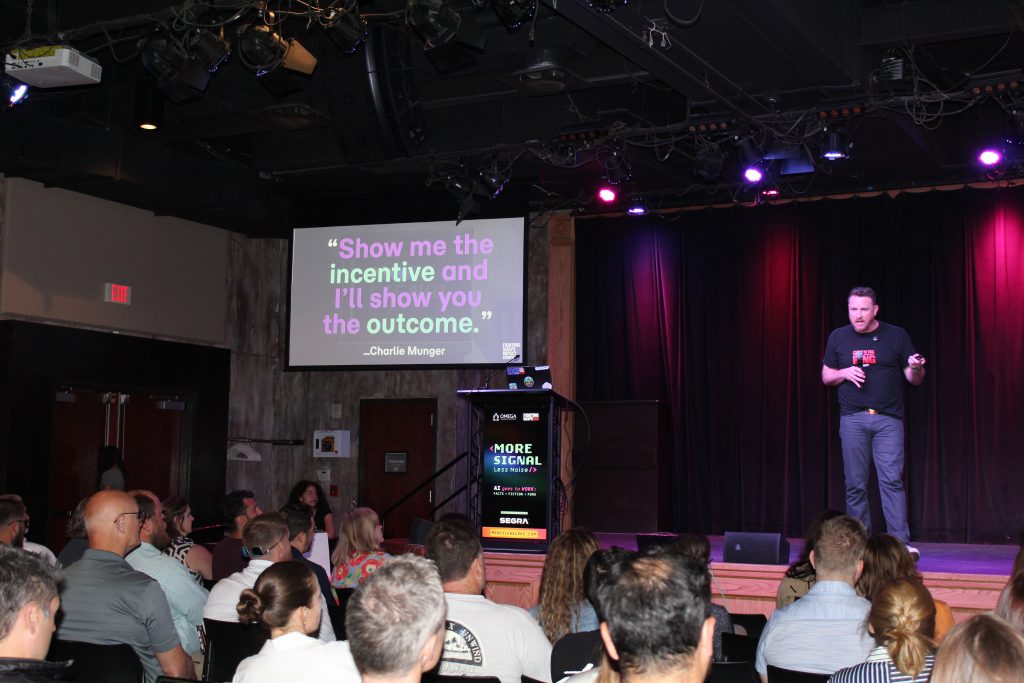
“Show me the incentive, and I’ll show you the outcome,” McAdoo said. “Incentive plus intention equals actual reality. When you have the intention to build and the intention to help, do you incentivize in the right way? Does your spending and effort align with the goals that you have?”
McAdoo grounded that perspective in his work as an Expert in Residence (EIR) at the Spark Innovation Center, where he works alongside some of the world’s brightest innovators. But even among that crowd, he said, the focus can drift toward how AI works rather than what it actually produces.
In one example, he described helping a founder use AI to compress what would have taken weeks of strategy work, like producing brand identities, customer profiles and business models, into days.
Optimizing security
Jared Meredith, senior director of engineering and architecture at Red Stag Fulfillment, described the challenge many lean IT teams know well: too many security findings, not enough bandwidth to act on all of them.
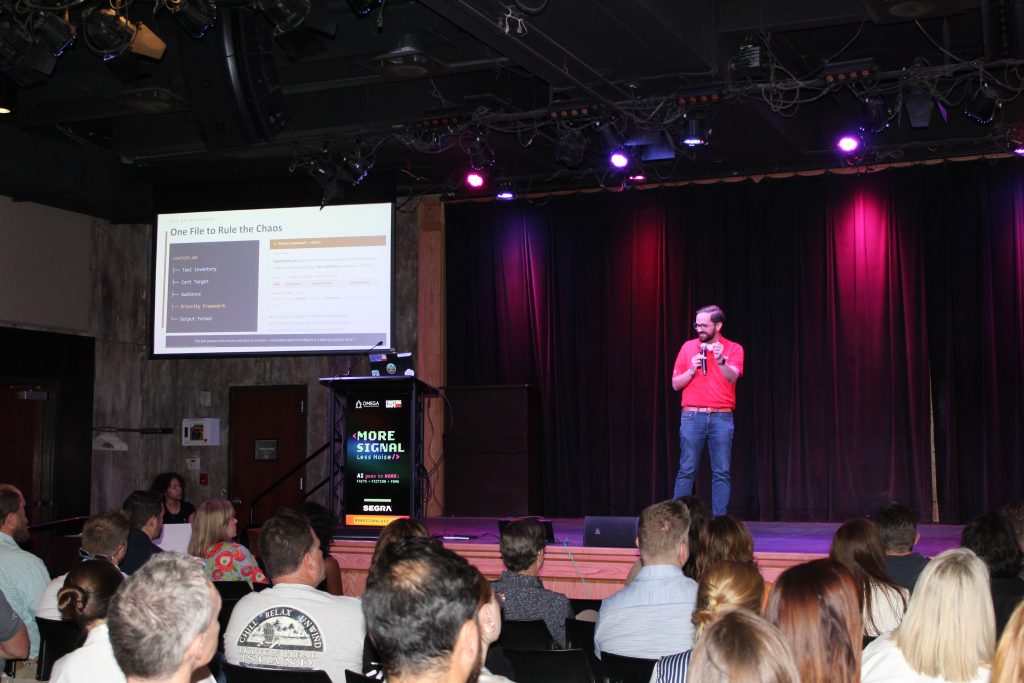
His solution was to use AI to build what he calls a “living document,” an automated security program that continuously surfaces and prioritizes risk so his team is always working on what matters most.
“What humans can’t do great, AI can help us do better,” Meredith said. “It helps congregate data and take all of that undifferentiated heavy lifting that you would do trying to model a program by hand. Instead of chasing finding to finding, you’re chasing priority to priority. You let logic help guide what the proposed approach is, and you still, as a business, apply what’s most important to you.”
What does this look like? A shared project inside Anthropic‘s platform that can be updated as the company evolves, loaded with different security frameworks as needed and accessed by every team member from the same workspace.
Ability to scale
Matthew Park, director of IT and customer experience at Cirrus Aircraft explained that Cirrus Aircraft has heavily invested in AI since 2025. A strategic project was months behind, prompting a decision to scale both the team and AI.
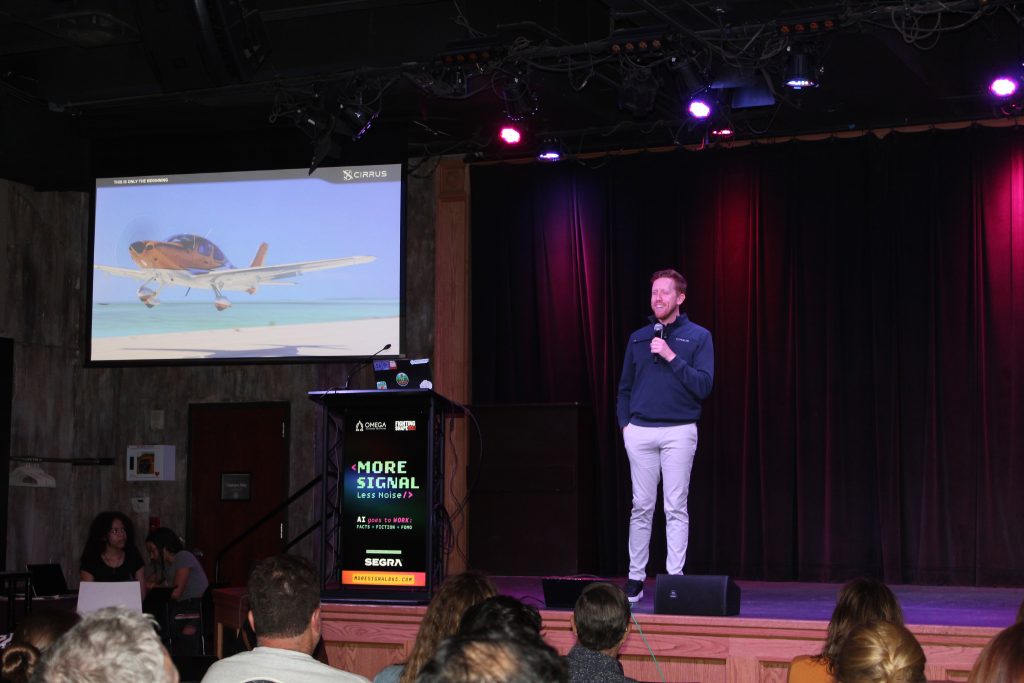
“One of the big reasons we leaned into AI is that we knew our customers want a luxury travel experience. They want to run to Asheville for lunch. As I fly myself, I know it’s only a three-hour flight from Knoxville to Nassau. I love to go explore the little islands of the Bahamas. That’s the lifestyle that we try to give our customers. Using AI tools frees our team up to enhance luxury travel experiences while streamlining aircraft maintenance and pilot qualifications,” he said.
Park said leaning into AI has led to a 5x increase in developer output, but introduced new, branching issues. To address this, machines now verify code first, but humans act as the final gate.
“We are the third largest aircraft manufacturer in the world. Everyone who buys a plane from us comes to Knoxville to pick it up and get trained. AI has allowed us to handle the backend and scale the customer service,” said Park.
The legal fine print
Next was a panel that tackled questions around intellectual property, privacy and liability in an AI-driven business environment. Moderated by Haseeb Qureshi, attorney and founder at Forthlaw, and featured Rhett Sexton, patent attorney, Merchant & Gould P.C., Jennifer Pearson Taylor, partner at Woolf, McClane, Bright, Allen & Carpenter, PLLC and Alex Nicoll, general counsel.
Before the panel dove in, Qureshi shared his hopes for the discussion.
“The industry is going to be self-protected, but is industry going to be using AI to actually make all the business lives and the technical lives here better? When people look at legal, it’s a little bit of a black box. We don’t want to make it a black box. We just want to make it a nice, transparent, open playground,” he said.
A successful event
When Blair was asked if this event lived up to his vision, he was happy to say that it did. The packed room agreed as well.
“The idea for this conference came to me on Black Friday. I was shopping around for ticket deals at other conferences, but it got me thinking. I want to know if I’m being pitched by a salesperson who paid to be on stage. These speakers did not pay to be here and speak on AI. These are people who have lived it,” said Blair.
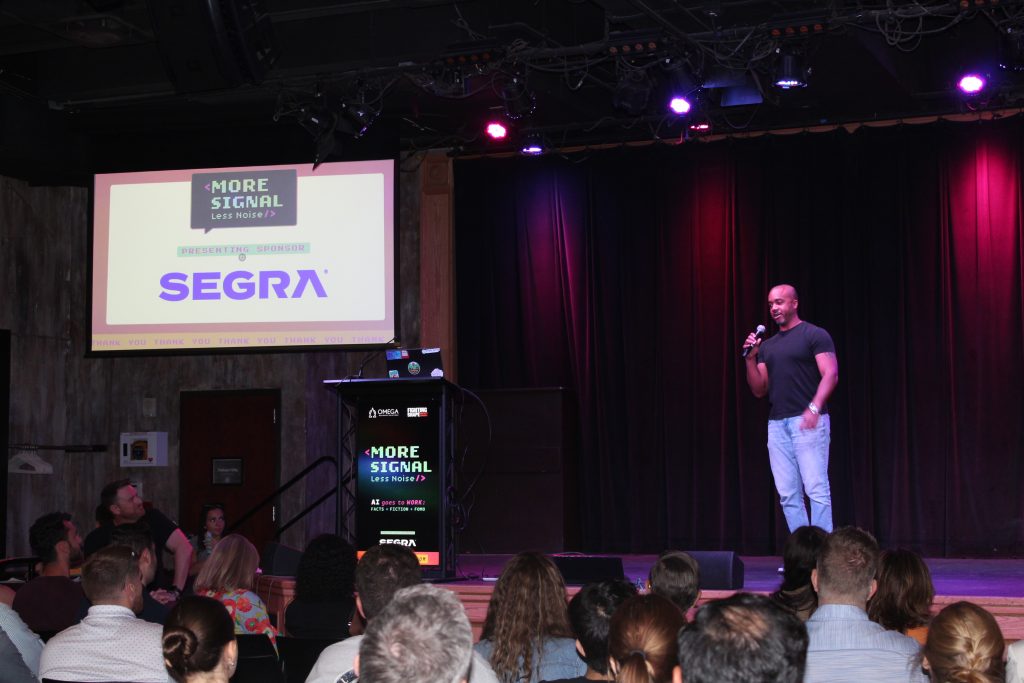
He recalled Parks’ presentation as proof.
“Because of how Cirrus could use AI to streamline efforts, they were able to cancel their research subscription because they got in front of the trends. That’s incredible. And on top of that, AI hasn’t replaced people. In fact, Cirrus is hiring more. That’s the type of insight I want to hear, and why we put this conference together,” ended Blair.
Like what you've read?
Forward to a friend!