
UT Forensic Anthropology Center opens new lab, triples capacity to identify missing persons
A new 2,725-square-foot facility attached to the William M. Bass Building strengthens the University of Tennessee, Knoxville's capacity to identify missing persons and sets the stage for a first-of-its-kind national accreditation.
The University of Tennessee, Knoxville (UTK) has long been known for its Forensic Anthropology Center (FAC), commonly referred to as the “Body Farm.” This center has become known as the world’s first human decomposition research facility and has inspired a generation of crime procedurals and investigators.
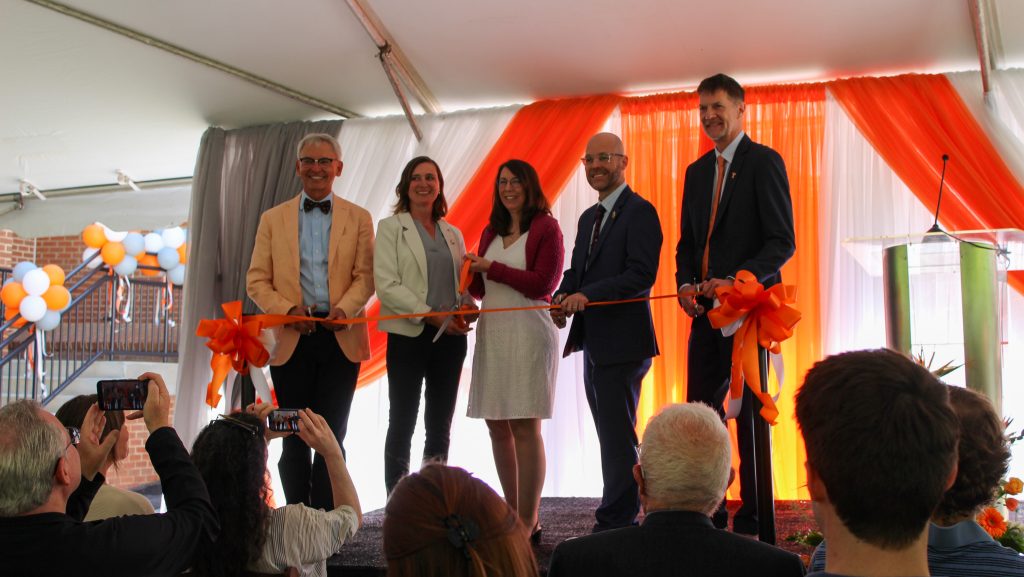
On Friday, stakeholders gathered for an opening ceremony to welcome its newest addition: the Forensic Anthropology Laboratory. This dedicated space was built to expand the center’s capacity to identify missing persons and bring answers to grieving families.
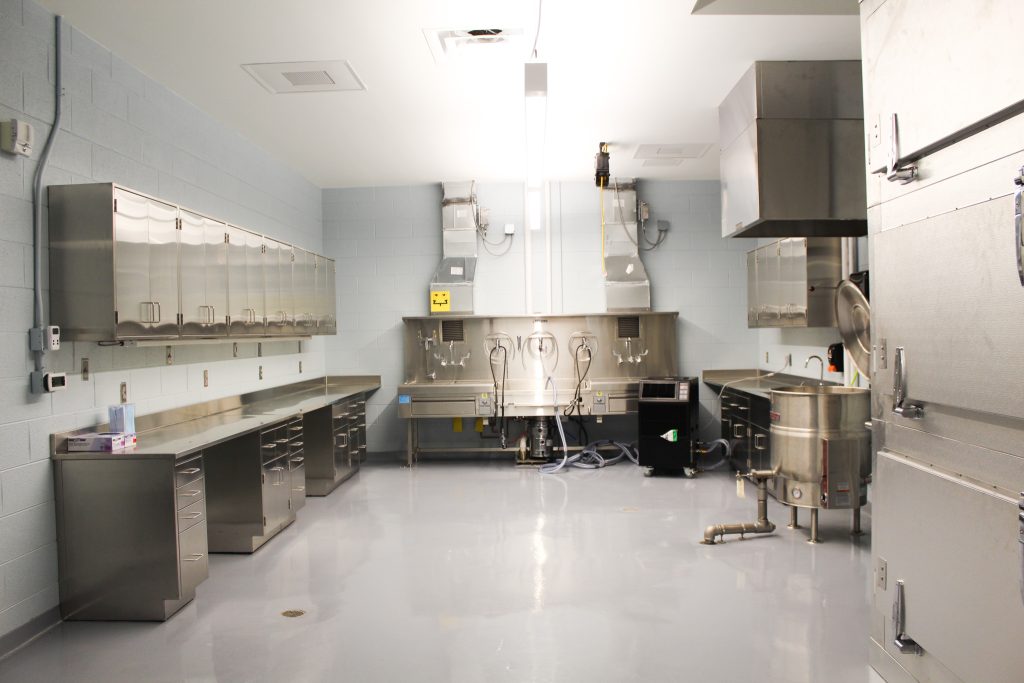
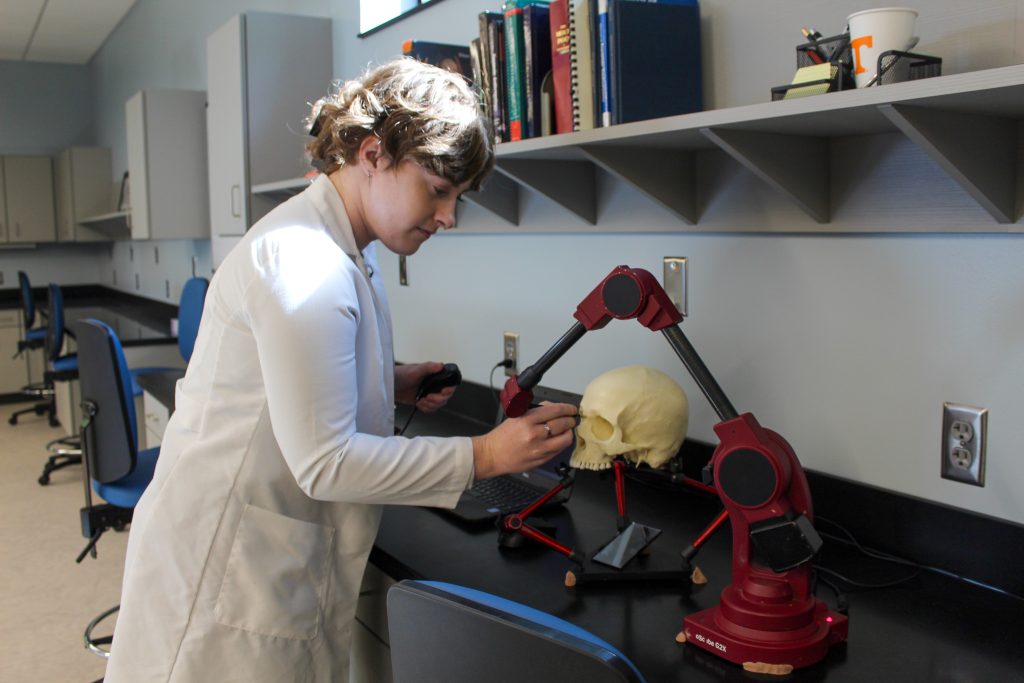
The facility includes six examination workstations, an X-ray machine, cold storage, and a wet lab. But the significance of the space goes far beyond specs.
History
The story of UT’s FAC traces back to a missed estimate. In 1977, Professor William Bass, the center’s founder, misjudged the time since the death of a Civil War soldier by 113 years. That error sparked his research passion that would change forensic science forever.
By 1980, Bass and UTK had broken ground on the Anthropology Research Facility (ARF), the first human decomposition research facility in the world. The Body Donation Program (BDP) launched the following year and has seen tremendous growth as the public’s interest in true crime TV shows and podcasts has increased. In 1987, UT formally established the FAC and has since expanded the facility five times.
Today, the FAC has trained over 1,500 participants from 46 states and 23 countries. The center also maintains a forensic data bank with records on more than 4,000 individuals and averages 30 human remains cases per year in partnership with medical examiners, coroners, and law enforcement agencies.
The new lab is designed to triple that annual caseload.
The push for accreditation
The lab is the final piece needed for the FAC to become the first accredited academic forensic anthropology laboratory in the country.
“Laboratory accreditation is a rigorous process overseen by an external professional agency,” said Dr. Dawnie Wolfe Steadman, professor of anthropology and former FAC director. “It ensures a laboratory’s operations meet international standards for forensic examinations. Accreditation assures the medical, legal community, and the public that our work is reliable, accurate, and trustworthy.”
Steadman, who hired current director Dr. Giovanna Vidoli in 2013 partly for her expertise in developing standard operating procedures (SOPs), which are key to accreditation, noted that just because the FAC has reached this point does not mean that momentum is slowing. She is excited to see the leadership and influence UTK will continue to have in the forensics space.
“Becoming the first accredited academic forensic lab also means that the FAC will help shape the standards by which others will be measured,” said Steadman.
More cases, more training, more innovation
Dr. Vidoli, who became FAC director in 2025, sees the new facility as a multiplier for casework, which will then boost workforce development.
“No cases are the same — all cases are different forensic cases,” Vidoli said. “So the more forensic cases our graduate students see, the more experience they gain, and it will increase our training capabilities. We’ll absolutely increase the number of partnerships that we have with medical, legal partners, and law enforcement.”
The lab’s upgraded imaging equipment will also sharpen the precision of identification and trauma analysis work that the center’s researchers depend on.
“The casework is real forensic cases. These are unidentified individuals, so we work with medical examiners and coroner’s offices to identify them. Other times, we’ll have cases where the person is identified, but we need to understand how and why they died,” said Caroline Znachko, a primary analyst at the FAC. “With tools already at our disposal and the new equipment, we can inform the process by looking for trauma or lack of evidence of trauma.”
Bringing people home
One of the most powerful moments of Friday’s opening ceremony came from outside the university. Brandon Elkins, special agent with the Tennessee Bureau of Investigation (TBI), offered a ground-level view of what the FAC’s work looks like in practice, and how it truly closes the loop on a case.
“When TBI agents and forensic anthropologists get together in the woods, some interesting things happen,” Elkins said. “The anthropologists start looking at soil composition, vegetation changes, skeletal artifacts, and the size of fingernail clippings. Anthropologists bring an incredible scientific perspective. TBI agents bring investigative experience. But those long days in the woods often lead to something incredibly important.”
That sense of shared purpose carried through every speaker at the ceremony. Researchers, students, and law enforcement alike kept returning to the fact that this work exists to bring families closure, and that this lab will only triple this ability.
“Behind every set of remains is a family that has spent months, years, and even decades trying to figure out what happened to someone they love,” Elkins said. “The work done by the forensic anthropologists at UT helps provide those answers. It restores identity. It supports justice. And most importantly, it helps families begin to finally find peace.”
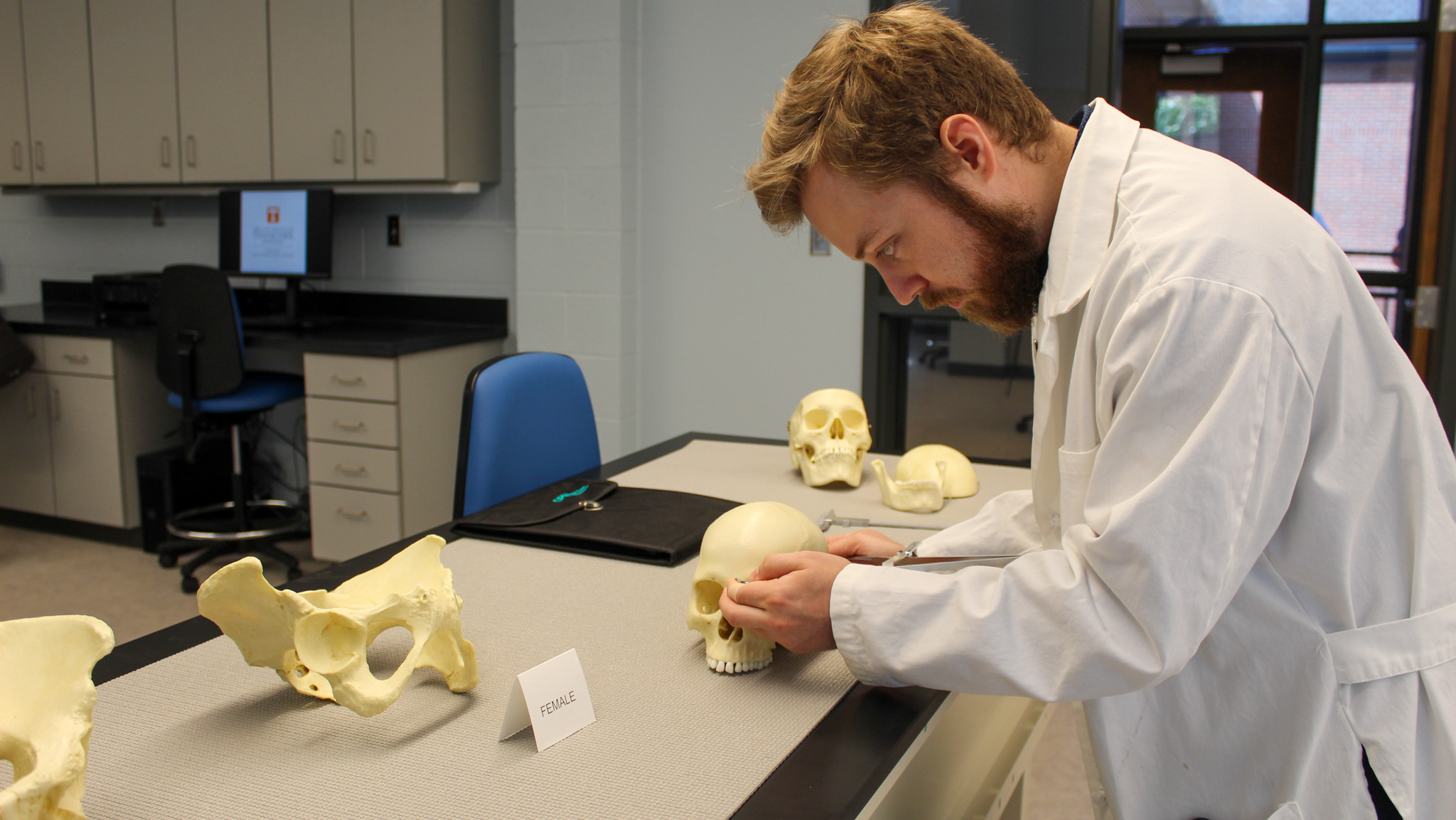
Note: Skeletal casts pictured are anatomical models used for demonstration purposes during the opening ceremony and do not represent actual human remains.
Like what you've read?
Forward to a friend!