

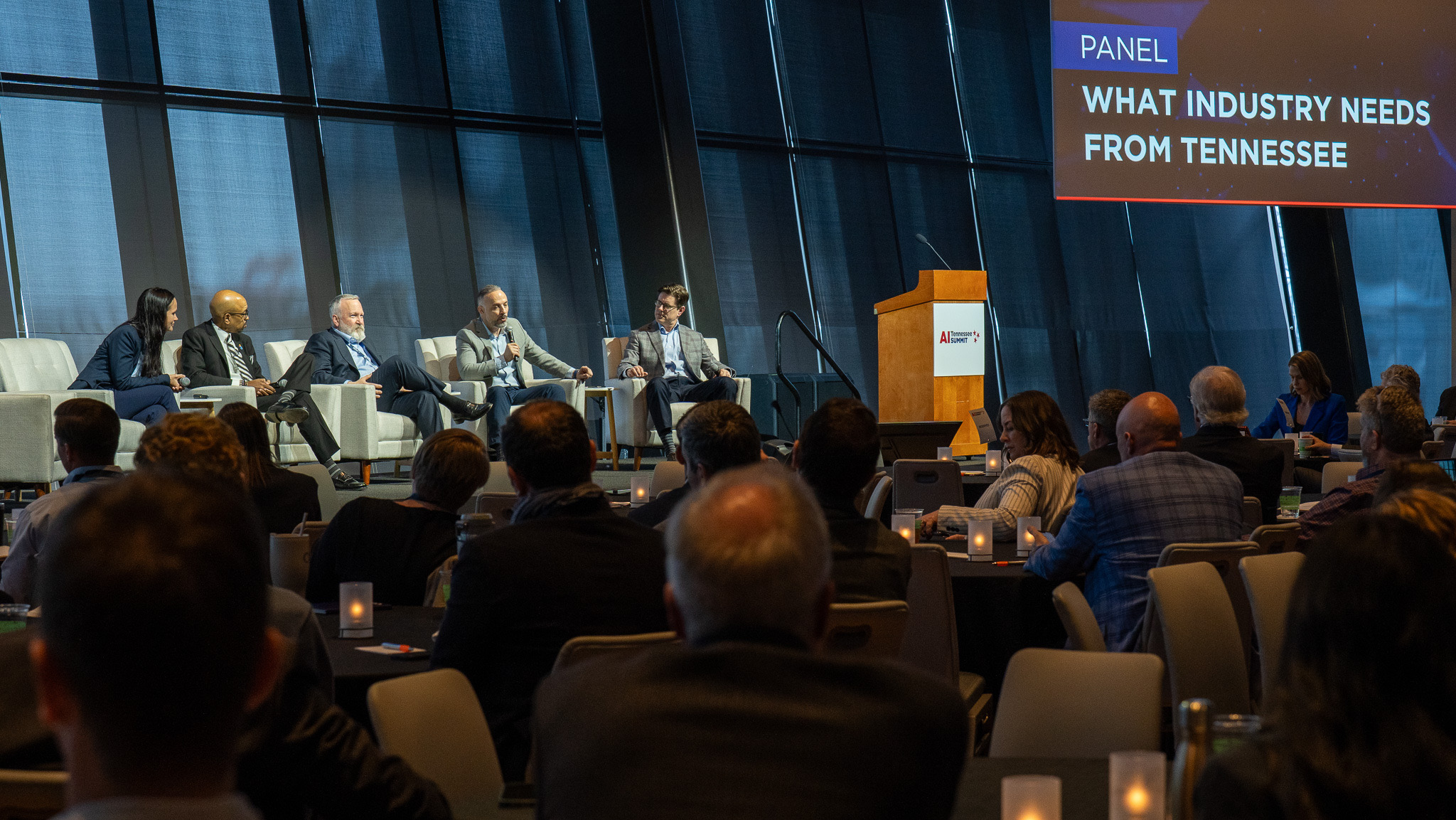
AI Tennessee Summit’s main takeway: Radical collaboration is a must
Speakers and panelists dissected what their communities and organizations are currently doing to adopt AI, and how to use it more strategically in the future.
The packed crowd at Nashville’s Country Music Hall of Fame this week represented four years of strategic, high-stakes groundwork. When the University of Tennessee, Knoxville (UTK) launched AI Tennessee in 2022, it began as an effort to bring together academic research and the state’s massive industry assets to position Tennessee as a powerhouse in AI innovation.
By the time of this summit, which was rescheduled from January due to a winter storm, AI Tennessee has evolved into a well-known, statewide mandate to adopt AI.
A core theme was that all four corners of the state must work together in “radical collaboration” to create meaningful and sustainable AI innovation. Here are some panel highlights.
Welcoming remarks: Vasileios Maroulas
The summit kicked off with Vasileios Maroulas, Director of AI Tennessee and Associate Vice Chancellor at UTK. He noted that AI is projected to affect 500,000 jobs in the state, creating a crucial need to up-skill and re-skill the workforce so that our people can excel in new, AI-focused careers.
But he also noted that the State, and UTK, anticipated this and decided to attack the challenge proactively.
“Unlike many states now scrambling to respond to federal AI initiatives, Tennessee is not starting from scratch,” Maroulas said. “We have been deliberate, proactive and exceptionally well-prepared with assets few states can rival.”
He urged all Tennesseans to come together.
“AI does not belong to one sector, and it can’t be advanced without partnerships from all groups,” ended Maroulas.
Opening strategic framing: Chancellor Donde Plowman
Next spoke UTK’s Chancellor Donde Plowman. For her, this summit was a dream come true.
“In 2022, when we launched AI Tennessee, this room is exactly what we envisioned. Government, academia, and industry coming together to embrace the opportunity and responsibility of positioning Tennessee’s AI efforts. To do that and be successful, all of us must work together.”

Plowman highlighted several organizations currently exemplifying strong cases of collaboration. One standout is UT’s new College of Emerging and Collaborative Studies, which draws expertise from faculty across various programs to prepare students for the interdisciplinary challenges of the modern workforce. With twelve curriculum departments, the college integrates industry partnerships directly into its model through stackable certificates.
Another key initiative is AITechX, which bridges the gap between applied research and entrepreneurship. Finally, she pointed to the Maplehurst Innovation District, a project designed to join the Oak Ridge Innovation Corridor and the Peninsula Innovation District, which includes the UT Research Park at Cherokee Farm. This district will serve as a hub for industry and innovation, specifically focusing on quantum computing, AI, and information science.
The Chancellor concluded by noting that she and Knoxville Mayor Indya Kincannon frequently refer to this approach as “radical collaboration.” Plowman emphasized that the spirit of the summit must extend beyond the event itself.
“We’ve got to think radically differently and be radically collaborative. This summit is a great start, but the real challenge begins when we leave here. Changing the world starts with changing Tennessee.”
Keynote – Winning the AI Race: The TN Advantage, Dr. Lynne Parker
Like it or not, everything seems to end up as a race. Living in Tennessee, we often hear that we are leading the charge in both AI and nuclear energy. But what does this look like from a broader perspective?
Lynne Parker, former Principal Deputy Director of the White House OSTP, offers a unique holistic lens. While she grew up in East Tennessee, her career at the highest levels of federal policy gives her a bird’s-eye view of the global landscape.
She argues that the winner of the AI race will be defined not by technical superiority, but by how effectively leaders foster trust and cross-sector collaboration.
“The AI race will not be won by who builds the biggest systems. It will be won by who learns to use AI well—across institutions, across sectors, and across communities. And that is a race Tennessee is uniquely positioned to win,” said Parker. “What truly differentiates Tennessee is not just what we have, but how we work together. Collaboration across academia, industry, government, and communities is our competitive advantage in the AI era.”
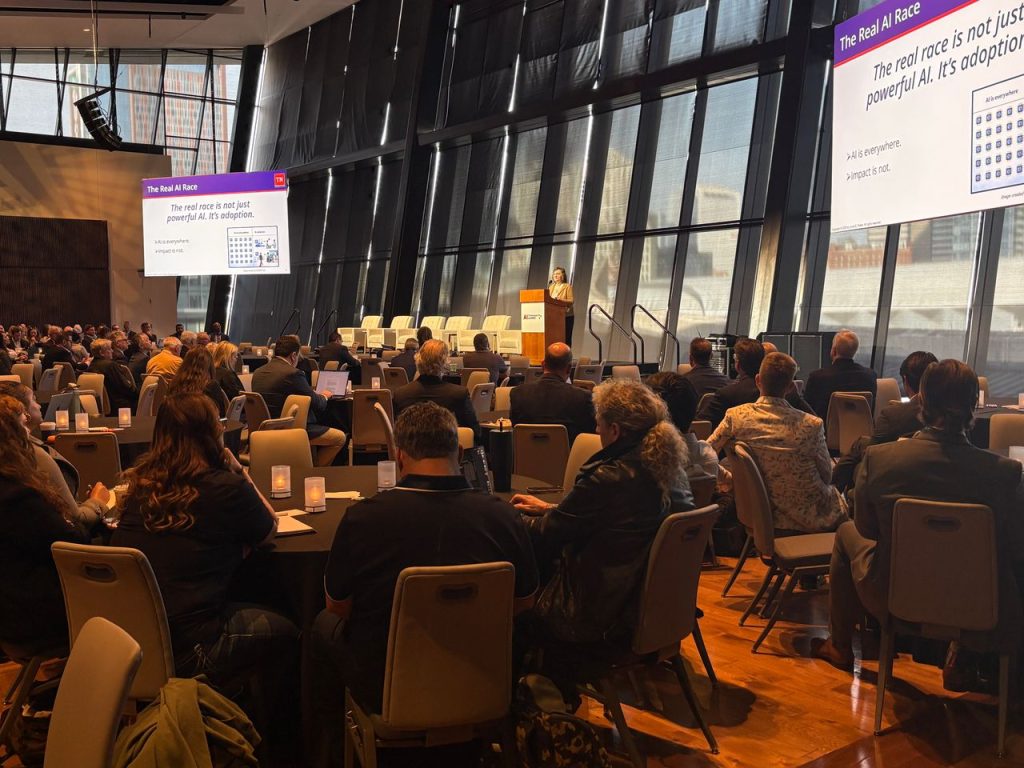
To ensure this success, Parker outlined several critical pillars for the future. First, AI adoption must be viewed as a strategic leadership choice rather than a simple IT decision. Second, as most AI pilots fail due to organizational friction rather than technical limits, there needs to be a fundamental shift in how people work and the incentives used to drive new behaviors. Third, the fastest adopters will be those with the highest levels of trust rather than the least governance. Finally, the talent pipeline must be secured by educators who embed AI into learning as a core component from the start.
Parker noted that the current momentum behind AI mirrors the state’s historical success during the Manhattan Project and its ongoing leadership in the nuclear renaissance. In short: Tennessee has a legacy of coming together to change history, and we are doing it again.
She ended with specific charges to ensure that this historic collaboration persists. Industry must intentionally redesign work processes to foster seamless AI efforts, while government should lead by example by integrating AI into public services. Lastly, policy makers must create the regulatory and economic conditions that allow innovation to flourish across the entire state.
AI in Tennessee’s Industry: Stuart McWhorter
Deputy Governor and Commissioner of the Tennessee Department of Economic and Community Development (TNECD), Stuart McWhorter, emphasized that Tennessee’s economic development approach to AI is rooted in human empowerment rather than displacement. He stated that AI is no longer a distant trend and that it is already deeply embedded in Tennessee’s core sectors like healthcare, logistics, and automotive manufacturing.
From Nashville’s status as a healthcare capital to Oak Ridge’s convergence of advanced computing and energy, he sees industry using AI for smarter automation, preventive maintenance, and high-level forecasting every day.
“AI is not one industry. It is the infrastructure of every industry,” said McWhorter. “If we want to recruit the companies shaping the future, we have to be shaping ourselves.”
Like what you've read?
Forward to a friend!