

A high-tech harvest | New Horizon Precision brings autonomous drones to Tennessee’s toughest terrain
"Farmers spend over $21 billion on chemical applications annually in the U.S.," Dore said. "We can increase a farmer's yield with more cost-efficient and precise spraying."
Agriculture in East Tennessee is often a battle against geography. Between steep slopes and unpredictable weather, traditional tractor-based chemical applications can be as dangerous as they are difficult.
Enter New Horizon Precision, an agricultural drone startup that recently took home first place at Vol Court, hosted by the Anderson Center for Entrepreneurship and Innovation (ACEI). While technology may not be your first thought when you think about agriculture, New Horizon is changing the narrative.
We sat down with co-founders Spencer Dore and Matthew Jones to do a deeper dive into the company.
A fusion of passions
The company’s origins are a merger of passions. Jones, who holds an undergraduate degree in electrical engineering from UT, spent time managing power systems for Samsung in Texas before returning to Knoxville to complete his master’s in computer science this past January.
He found a like-mindedness in Dore, a UT senior studying business management and AI. Dore was originally interested in AI for military drone applications but pivoted when he saw the potential for local impact.
“I wanted to put my efforts behind something that would have a more positive impact, like agriculture,” Dore explained. “When I had the opportunity to start working with Matthew, I immediately hopped on board.”
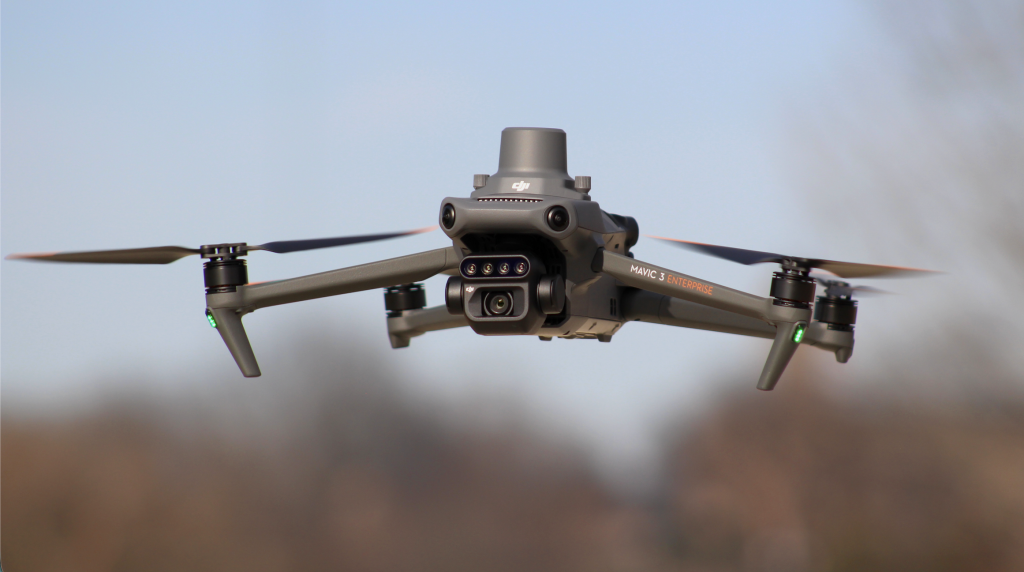
To Dore, the positive impact is that these drones address the top equipment-related cause of death on Tennessee farms: tractor rollovers.
“These farmers are putting themselves at risk by driving up steep slopes their equipment can’t handle,” Dore said. “Add in muddy conditions common in Tennessee, and the risk multiples. These drones fly over any mud or slope and make those applications safely and fairly painlessly.”
Proving the concept
The business was forged in ACEI’s Summer Studio, a 12-week summer cohort. To further vet their idea against a real-world problem, the duo participated in UT’s NSF I-Corps program, conducting over 50 interviews with potential customers.
“It really challenged us to get out there and talk to different people,” Jones said. “It encouraged us to reach out to everyone in the agricultural drone space. We made some potential partnerships just by feeling more comfortable calling people on the phone.”
That comfort level was critical because, as Dore notes, farmers are a notoriously “sales-averse” demographic. “Everyone’s trying to sell to them and squeeze their margins,” he said. “If we mess up their crop, we can destroy their revenue for the entire year. Trust is everything.”
To build that trust, New Horizon secured a partnership with the Knox Farmers Co-op, serving as their primary provider for aerial drone operations, including fertilization, seeding, and herbicide application.
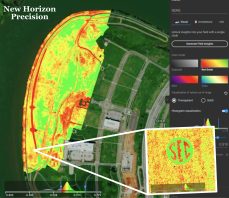
To further bridge the trust gap, New Horizon has launched a Customer Account Portal. In an industry where deals are often settled with a handshake, the portal validates the contract and offers complete transparency.
“The drones collect so much data,” Dore said. “We can create maps explaining what we saw in the field and show them definitively: ‘Yes, we did get every square inch, and here is the rate.'”
The portal will also allow farmers to access multispectral maps, which can reveal plant disease or drought stress before it’s visible to the farmer on the ground. Looking forward, the team is exploring AI imaging models that could automate weed analysis and herbicide prescriptions.
The “Formula One” of farming
While the business model relies on old-school relationships, the operation itself is high-speed. Using an FAA exemption that allows them to fly at 40 mph, the team operates nine-foot-wide, 300-pound drones that move with pre-mapped centimeter-level accuracy.
“We did a fertilizer job recently where the drone was emptying its entire tank in three minutes,” Dore said.
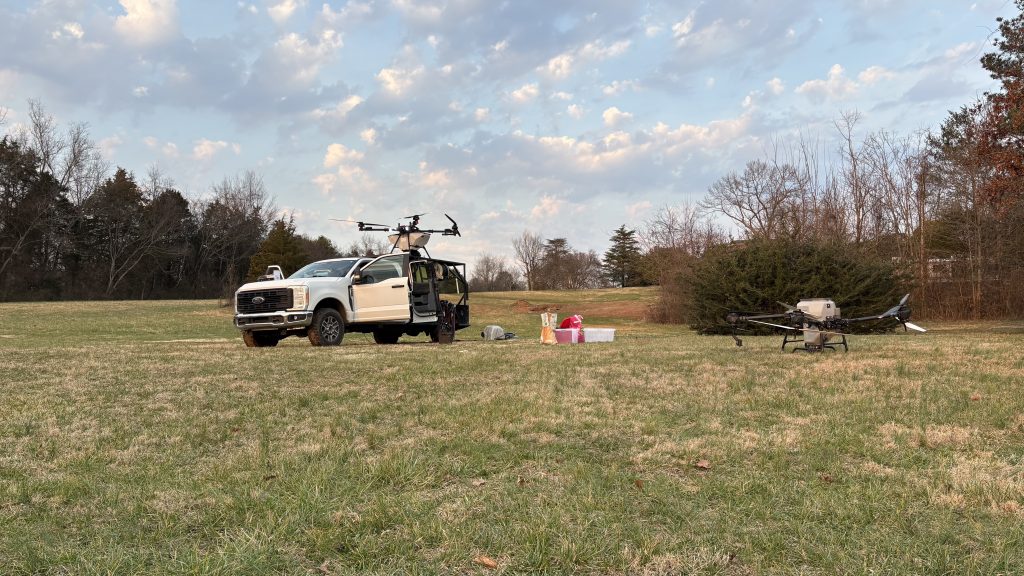
To keep up with that pace, the team operates out of a custom truck that acts like a mobile aircraft carrier. “It’s essentially like a Formula One pit stop,” Dore added. “The drone lands next to or on the truck, we swap batteries as fast as possible, use a gas nozzle to fill up the generator that recharges the batteries, and then it resumes right where it left off.”
Scaling for the Southeast
The $1,500 Vol Court prize is already being put to work as New Horizon plans to hire an intern from Middle Tennessee State University’s Unmanned Aircraft Systems Operations Concentration. This move brings in more specialized talent as they eye the upcoming ACEI Graves Pitch Competition. A win there could provide the capital needed for another truck or an additional flight crew, critical components for their expansion beyond Middle and East Tennessee.
The team has remained fully bootstrapped, with the help of their pitch funds, for this first season. However, they are already anticipating the wind down after their heavy application season of June, July, and August.
“The main season for chemical application is relatively short,” Dore noted. “To account for that, we’re booking 90-hour weeks during the peak season and even secured special FAA exemptions to operate after dark.”
They are also exploring expansion into golf course and turf management for year-round opportunities.
Toward the end of the year, they welcome conversations regarding future fundraising and ways to tap into these industries.
Follow New Horizon Precision on LinkedIn.
Like what you've read?
Forward to a friend!