

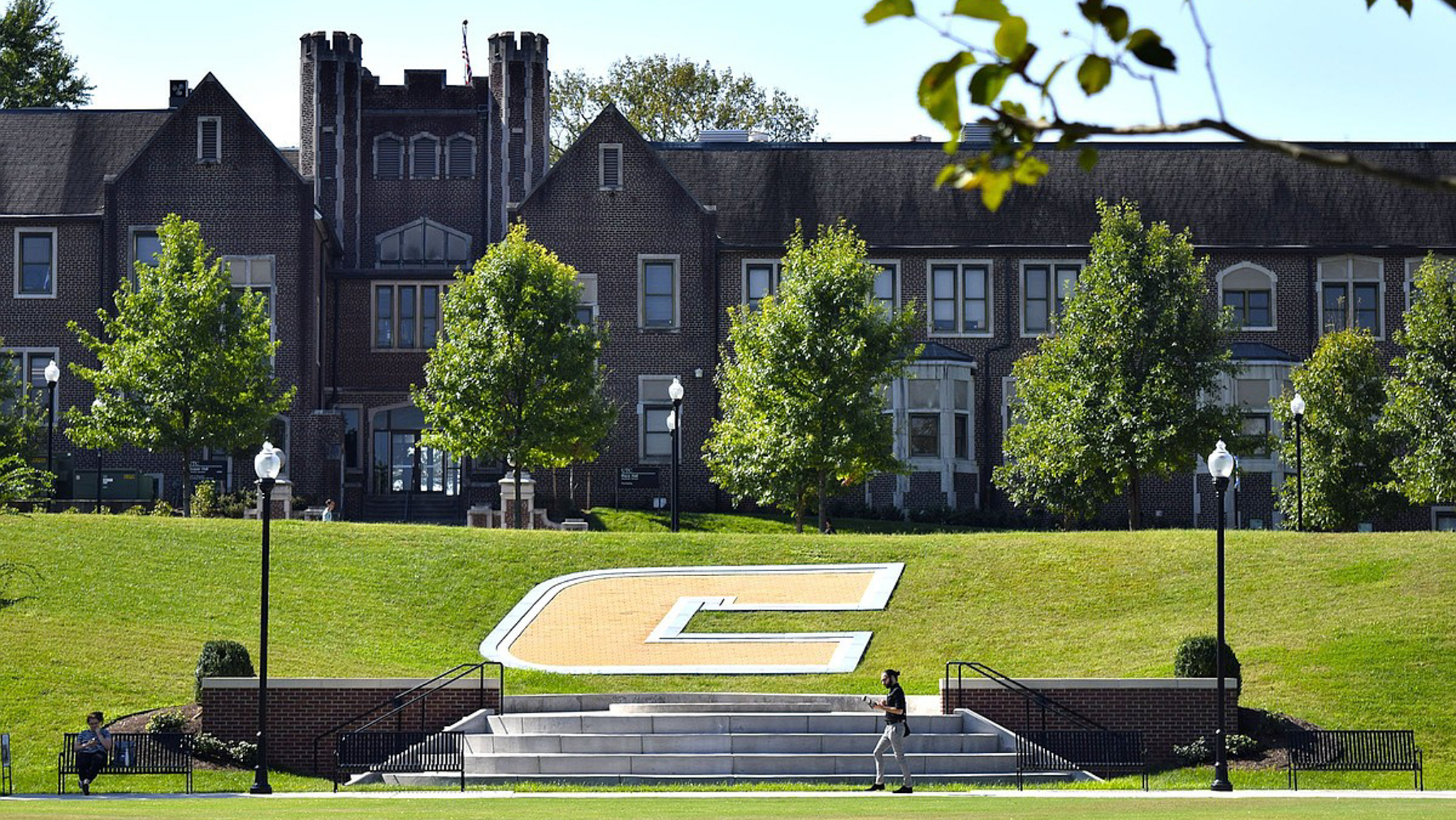
UTC Launches new Nanoengineering Center to fuel Tennessee’s tech corridor
While the world of quantum and nanotechnology operates at a scale invisible to the plain eye, its impact on Tennessee’s economic landscape is becoming hard to miss.
The University of Tennessee at Chattanooga (UTC) recently announced the launch of the Nanoengineering Center. Housed under the UTC Research Institute, it is designed to bridge the gap between complex science and the urgent needs in energy, health and defense.
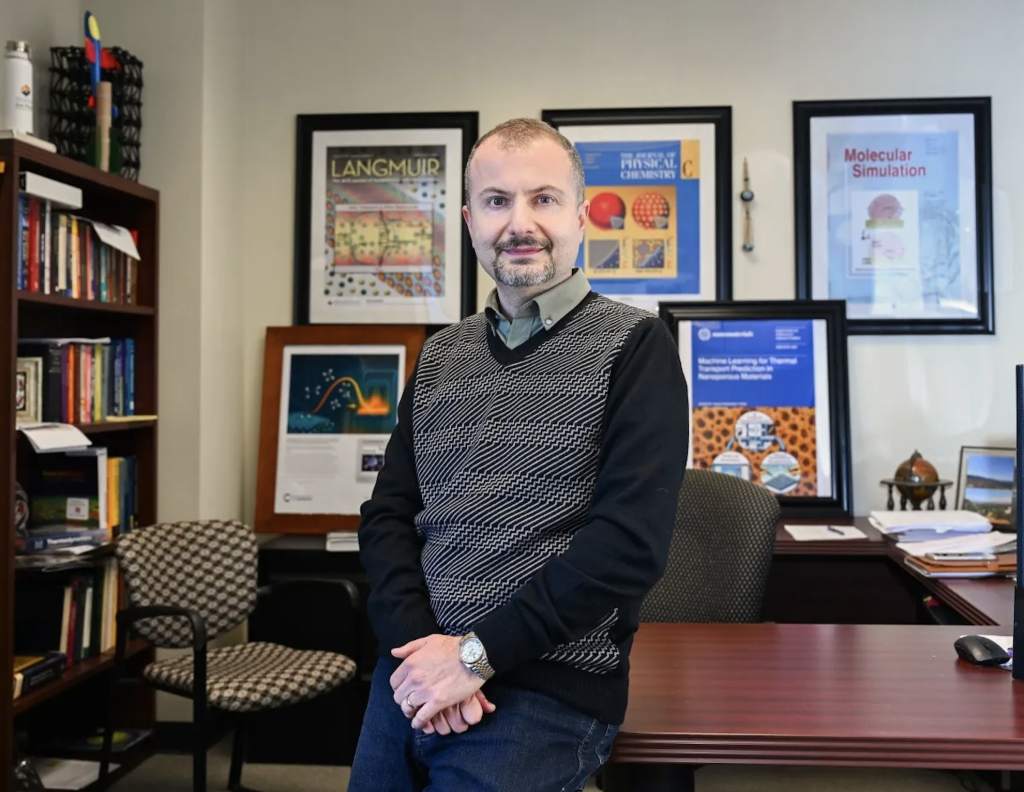
The center is under the leadership of Founding Director and Associate Professor of Mechanical Engineering, Dr. Murat Barisik. We sat down with Barisik to discuss how this new center will serve as a catalyst for workforce development and a differentiator for Tennessee.
Q: How did the specific vision for a Nanoengineering Center come to life?
A: The idea started with a simple need. We wanted a place where people across UTC could work together, including engineering, science and other disciplines, to solve problems that do not fit inside one department. Many of today’s challenges cannot be solved with one toolset. They require different skillsets working together.
Over the last few years, we have been fortunate to build momentum with a strong team, active projects and growing external support. We are also strengthening connections with the Oak Ridge Innovation Institute, ORNL, UTK and other academic partners.
Forming a center became the natural next step. It lets us keep doing the work we have already started, but with a clearer structure, better visibility and a stronger platform to grow collaborations and student opportunities.
Q: Chattanooga is quickly becoming known for quantum. How does the Nanoengineering Center plug into that ecosystem and the broader Tennessee quantum landscape?
A: To support the device and algorithm efforts in Chattanooga’s quantum ecosystem, we also need the materials, nano-enabled fabrication and predictive modeling that make quantum technologies practical. That is where the Nanoengineering Center plugs in. We contribute by bringing nano-focused capabilities and by connecting teams across disciplines that can translate nanoscale science into usable technology.
This is also reflected in NSF’s recent emphasis that links quantum and nanotechnology in the same funding direction. It highlights that progress in quantum depends on advances in materials, characterization and manufacturing. We are currently participating in a UTK-led proposal aligned with this NSF call, which is timely as the center launches and as UT System collaborations continue to grow.
At UTC, we already have active projects and strong experience in three areas: nano-enabled energy materials, nanoscale approaches in medical and bio applications and defense-relevant materials under extreme conditions, including hypersonic ablation. These strengths create a natural bridge into quantum materials and quantum-enabled devices as the center grows.
Q: For the layperson, how do you explain nanotechnology?
A: Nanotechnology is what happens when you can design and control materials at the scale of molecules and atoms. The story goes all the way back to Richard Feynman. He gave a very well-known talk about his vision that there are many opportunities if we can understand and control things at the nanoscale.
That is the big idea, and it is something I try to teach even to K–12 students. For example, we read Dr. Seuss’ “Horton Hears a Who” to elementary school students. The message is that there are things we cannot see, but we should still be aware of them and understand why they are important.
Here is a simple example. You throw a sugar cube into water. What happened to the sugar? Students may say it disappeared. But it did not disappear. It just broke into smaller pieces that you can’t see, and it substantially changes the water by making it taste sweet.
That is the same mindset behind nanotechnology. It gives us tools to understand and control matter at very small scales, and that can open new possibilities. That is why we focus on areas like energy, health science and defense — where nanoscale effects can lead to better materials and performance than we can reach with conventional approaches alone.
Q: How is the Center approaching workforce development locally and abroad?
A: Workforce development is central to what we do, and it really runs through students. Across the center and participating groups, we are supporting a growing number of PhD, master’s, and undergraduate researchers. We are especially encouraged that students can contribute at a high level early. For example, one of our undergraduate researchers has already published in a high-impact journal, using molecular dynamics to support materials characterization.
Locally, we focus on hands-on training, research assistantships and close collaboration with partners across the region, including national lab connections. More broadly, we work with domestic and international collaborators through joint projects, shared training materials, seminars and student and postdoc exchanges. Our goal is to help students build practical skills in nanotechnology and AI because these tools are becoming increasingly common across science and technology.
Q: From an economic development perspective, what makes this center a differentiator for UTC and the State of Tennessee?
A: It is hard to put a single impact number on a center at day one, but the national data shows why this matters economically. The National Nanotechnology Initiative reports that nanotechnology is already responsible for over 171,000 jobs across about 3,700 U.S. companies conducting nanotechnology R&D. One estimate puts the economic impact on the U.S. economy at close to a trillion dollars over the past two decades.
For Tennessee, the differentiator is that we can help convert that national momentum into local capability and workforce. High-tech jobs in quantum and nano-enabled industries depend on people who can model, characterize and manufacture at the nanoscale. The Nanoengineering Center is built to train that workforce through hands-on research and to create a clear pathway for partners, including ORNL and UT System collaborators, to engage UTC talent and capabilities. That combination supports economic development by growing a stronger pipeline of skilled graduates and by attracting more external projects and partnerships into the region.
Q: Finally, tell us about your journey. What drives a mechanical engineer to go into nanotech?
A: I’ve been working in this area for about 10 years. I’m a mechanical engineer, but I’ve always had a strong curiosity and I like learning new things. I never wanted to keep doing the same work in the same lane, and I don’t mind being challenged. That mindset naturally pulled me toward nanotechnology and helped me build a range of projects.
When a problem requires learning material science, I learn it. When it requires chemistry, I lean into that, too. Along the way, I’ve also learned computational science and now use AI and machine learning heavily in my research. I enjoy working at the intersection of these fields, even when it is demanding.
I’m grateful to serve as the founding director of the Nanoengineering Center, and I appreciate the support and vision of Chancellor Lori Mann Bruce and Vice Chancellor for Research Dr. Mina Sartipi in making it possible.
Connect with Barisik to track the Center’s latest breakthroughs and partnership opportunities.
Like what you've read?
Forward to a friend!