
Partnerly named winner of inaugural Reverse Pitch at spring Vol Court 2026
The Anderson Center for Entrepreneurship and Innovation kicked off the spring 2026 Vol Court series with a pitch session, crowning Partnerly the winner of its Reverse Shark Tank.
Vol Court is an experiential learning program and pitch competition that guides student entrepreneurs through transforming unique business ideas into clear, confident, and compelling pitches. Participants who complete the requirements are eligible for a share of $3,000 in Roe Prize funding.
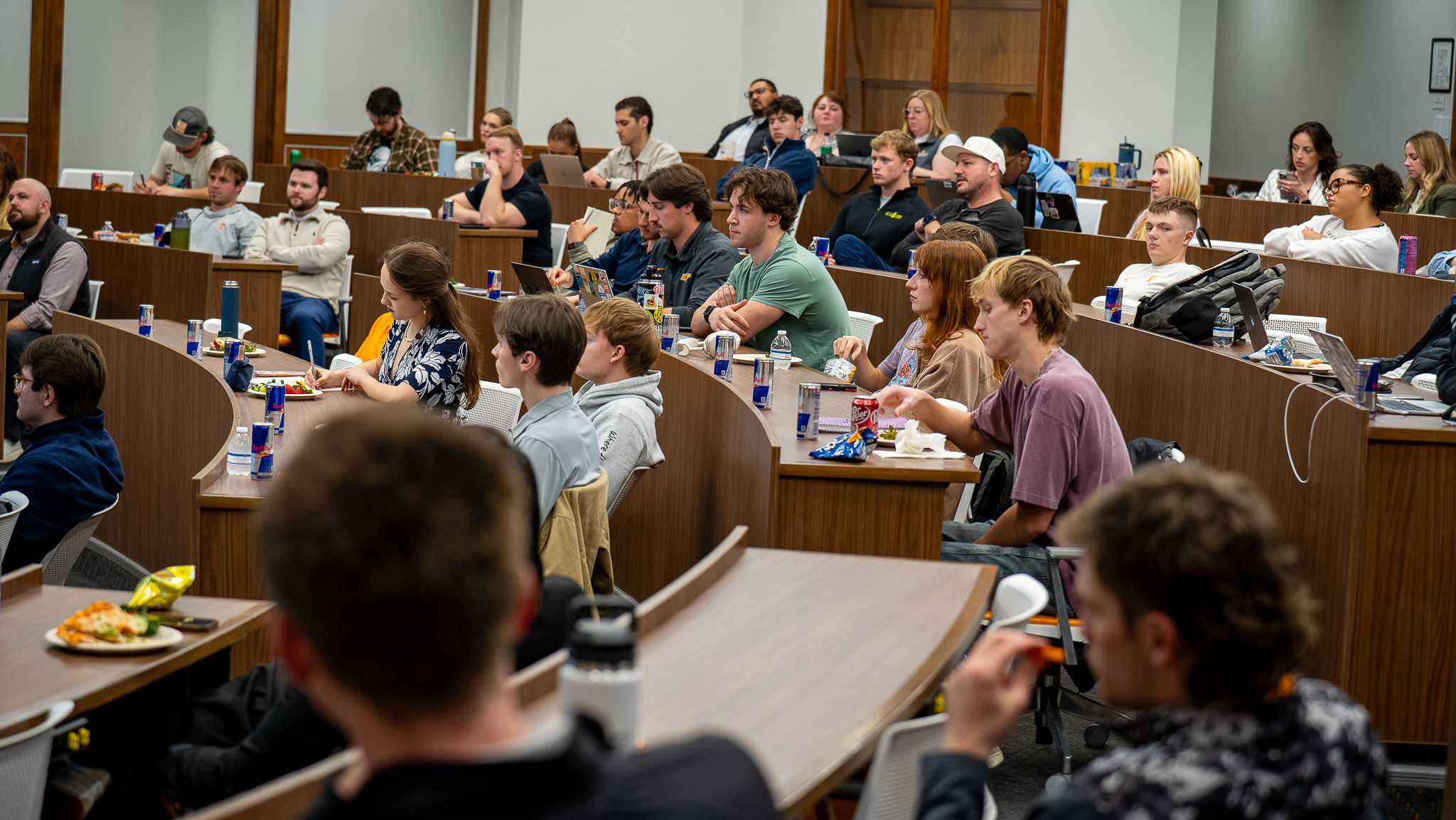
Hosted by the Anderson Center for Entrepreneurship and Innovation (ACEI), the most recent Vol Court drew such a large crowd on Wednesday night that the event moved from the ACEI to the Student Union. Breanna Hale, executive director of the ACEI, moderated the event.
The Vol Court initiative stemmed from student feedback noting that aspiring entrepreneurs often lack opportunities to deliver elevator pitches until after graduation. The program aims to provide early exposure and practice to bridge that gap.
The Reverse Shark Tank is a cornerstone of the Vol Court initiative. During this interactive session, local entrepreneurs deliver their own elevator pitches to the students. This creates a learning moment where the professionals are in the hot seat, giving students a chance to observe before it is their turn to get in on the action on Pitch Day.
Attendees engage with each pitch, discussing strengths and areas for improvement, before voting for the strongest presentation. The live events are open to University of Tennessee students, faculty, staff, alumni, and the local community.
The Pitches
B-Roll Bank
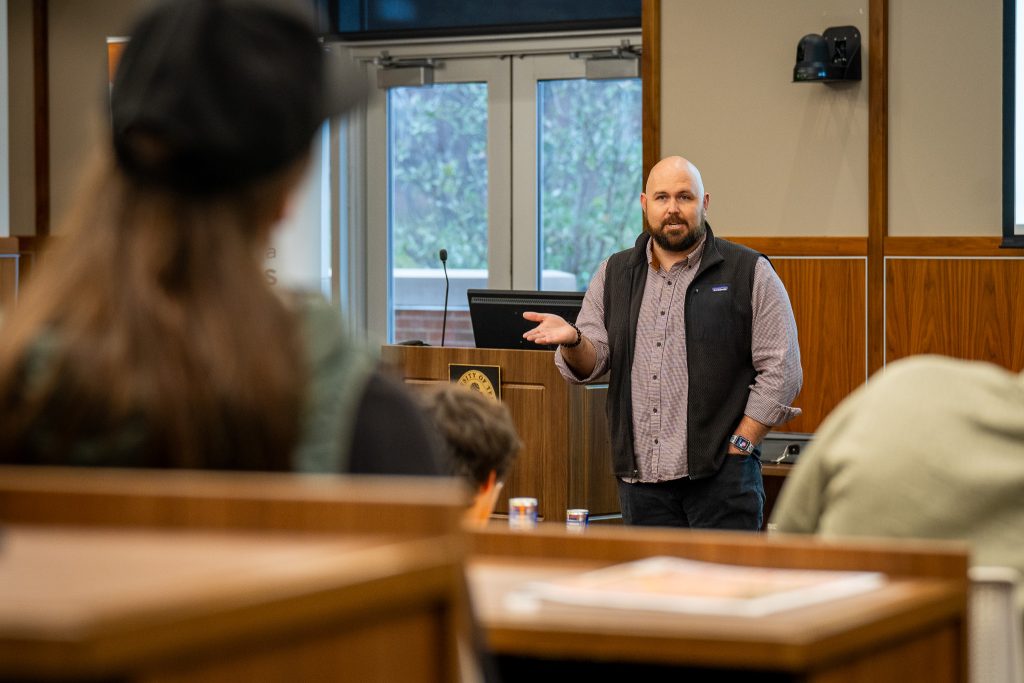
Founded by Jonathan Halley, B-Roll Bank is an AI-powered digital asset manager for production companies. Halley spent three years developing the product, which launched in November 2025. The tool makes content searchable, eliminates storage bloat, and turns a major expense into a revenue source. As B-Roll Bank is a Big Slate Media project, the pitch positioned Halley as an industry expert who understands the frustrations of digital asset management firsthand.
Lushdrop Beverage Co.
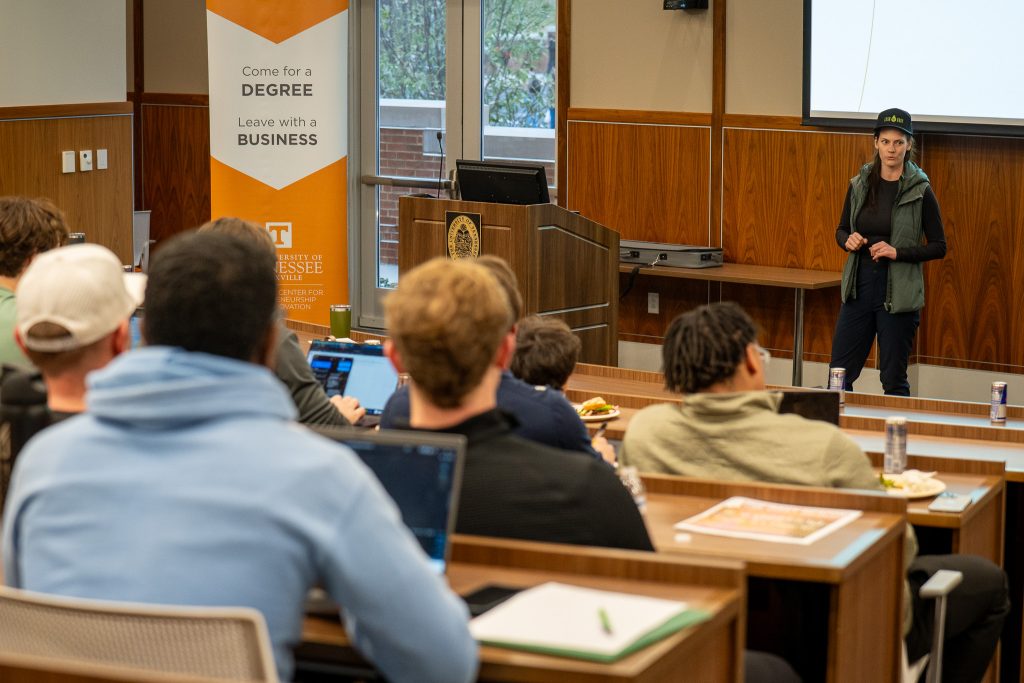
Cofounded by Nick Devore and Chelsea Rusche, Lushdrop Beverage Co. offers 100 percent organic, Fair Trade Certified coconut water sourced from Thailand. Because the source region maintains stable temperatures year-round, the flavor remains sweet and consistent. Marketed as 3x more hydrating than leading brands due to its unique ratio of electrolytes, their product avoids the high sodium levels common in Western diets. A main differentiator for Lushdrop as a food and beverage brand? They don’t want to be on grocery store shelves. First, the products are so fresh that they require constant refrigeration. Second, their audience prioritizes luxury and wellness, not convenience. By placing the product in premium spas, coffee shops, and fitness studios, the brand aims for alignment with its target audience.
Modern Working Moms
Founder and CEO Kimberly O’Neal launched this platform after leaving a cybersecurity career to find a better balance between professional skills and family life. Modern Working Moms connects mothers with flexible job opportunities through a three-tier subscription model for users and three interaction options for companies. To eliminate the “noise” of traditional job sites, O’Neal personally hand-sorts candidates to present the top three picks to employers.
Partnerly
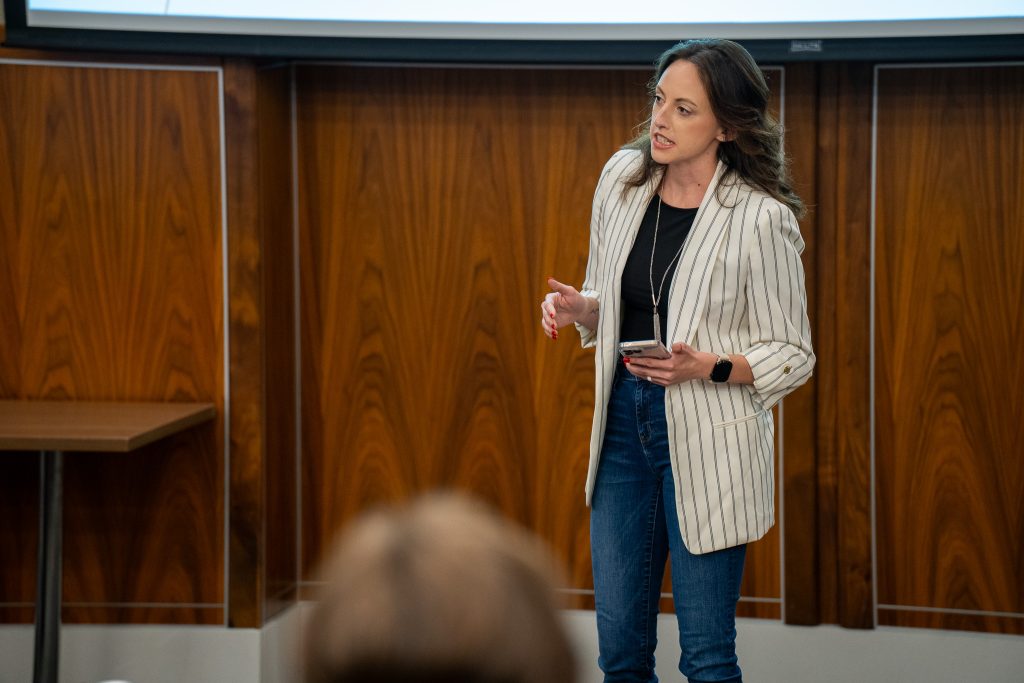
Founded by Blake Hopkins, Partnerly addresses the intimidation factor of influencer marketing, such as missed deadlines and poor ROI. The platform connects small businesses with creators based on shared values while providing robust reporting. A key differentiator is its escrow-style payment system: Parties are not paid until all are satisfied, ensuring accountability between the brand, the creator, and Partnerly.
Witching Hour
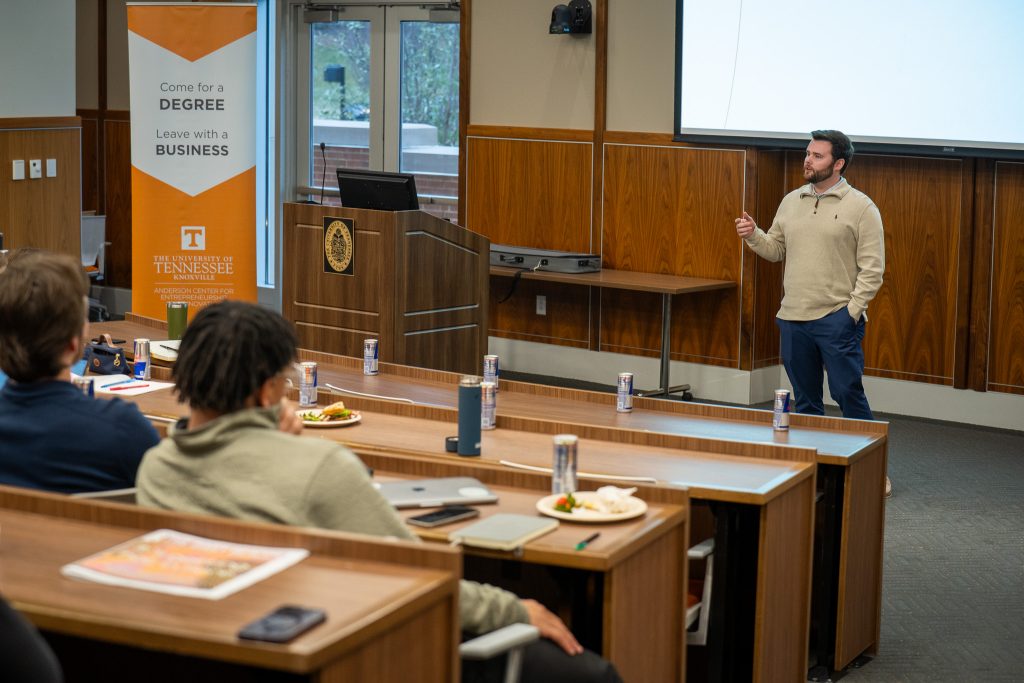
Lance Adler’s startup was inspired by his time working for a utility company in California. Witching Hour utilizes advanced materials to reduce power line faults that lead to wildfires. While current mitigation, such as undergrounding lines, can cost $4 million per mile, Witching Hour offers a two-part solution: a specialized coating for high-risk lines and a robotic machine to apply it. This eliminates the need for risky human intervention and is more cost-effective.
Key Takeaways
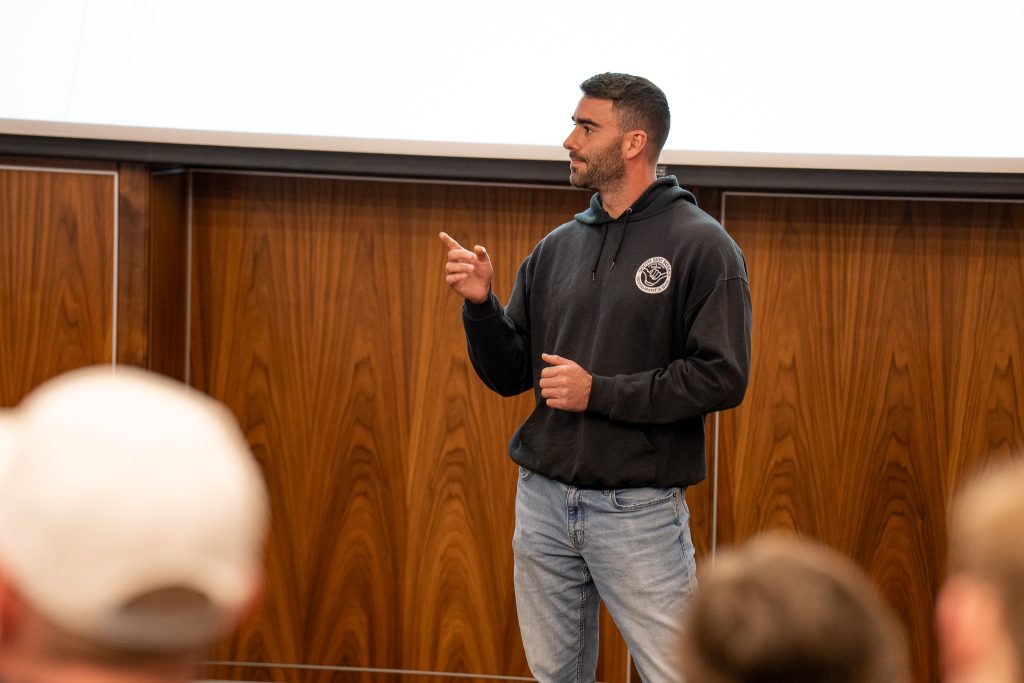
During a Q&A session, the founders revealed that these pitches were the result of extensive practice. They encouraged students to pitch at every opportunity and take advantage of all available support, including the 14+ startup coaches and additional resources provided by the Anderson Center.
This support positions the University of Tennessee as a key player in the region’s entrepreneurial ecosystem, a place where students can arrive for a degree and leave with a business.
Teknovation looks forward to covering the official student Pitch Day on Feb. 25.
Like what you've read?
Forward to a friend!