

First American Nuclear partners with State of Indiana on a small modular reactor
The agreement involves moving company’s headquarters, manufacturing facilities, and an energy park to position the state at the forefront of U.S. global leadership in sustainable nuclear technology.
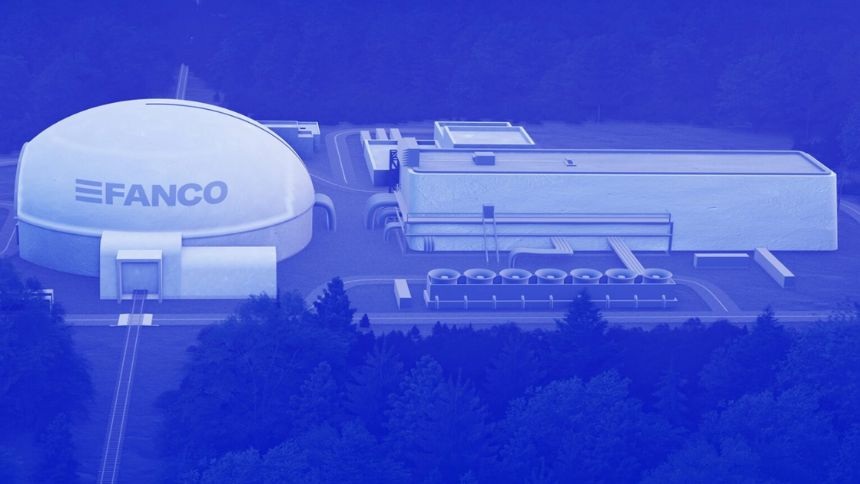
First American Nuclear (FANCO), developer of a fast-spectrum small modular reactor (SMR) designed to deliver the most cost-effective utility-scale power in the world, and the State of Indiana have announced plans to establish Indiana as the home of the company’s headquarters, manufacturing facilities, and an energy park to position the state at the forefront of U.S. global leadership in sustainable nuclear technology.
“Indiana is leading the nation in the next chapter of American energy independence,” said Governor Mike Braun. “With First American Nuclear planting its roots here, we’re bringing 5,000 high-paying, generational Hoosier jobs while cementing our state as a leader in clean, reliable nuclear power.”
The energy park is designed to be the first to operate in a “closed-fuel cycle” in U.S. history, meaning it will reprocess and reuse spent nuclear fuel on-site, eliminating 97 percent of long-lasting nuclear waste. The EAGL-1 reactor can also create more fuel than it burns, setting the stage for nuclear energy to be deemed not only clean, but renewable.
“In the flurry of America’s nuclear renaissance, Indiana and FANCO found a shared commitment to technical merit, authenticity, and follow-through,” said Mike Reinboth, Chief Executive Officer of First American Nuclear. “Collectively, our team has dedicated centuries to nuclear science, resulting in an unmatched nuclear solution that, fittingly, will take root in the crossroads of America.”
FANCO’s flagship technology, the EAGL-1 SMR, is the only nuclear technology in the U.S. cooled using a liquid metal alloy called lead bismuth. Having been involved in numerous commercial reactor deployments and nearly every major advanced nuclear project in the Western Hemisphere, the FANCO founders worked with sodium, molten salt, pressurized water, and high-temperature gas coolants for decades.
Like what you've read?
Forward to a friend!