

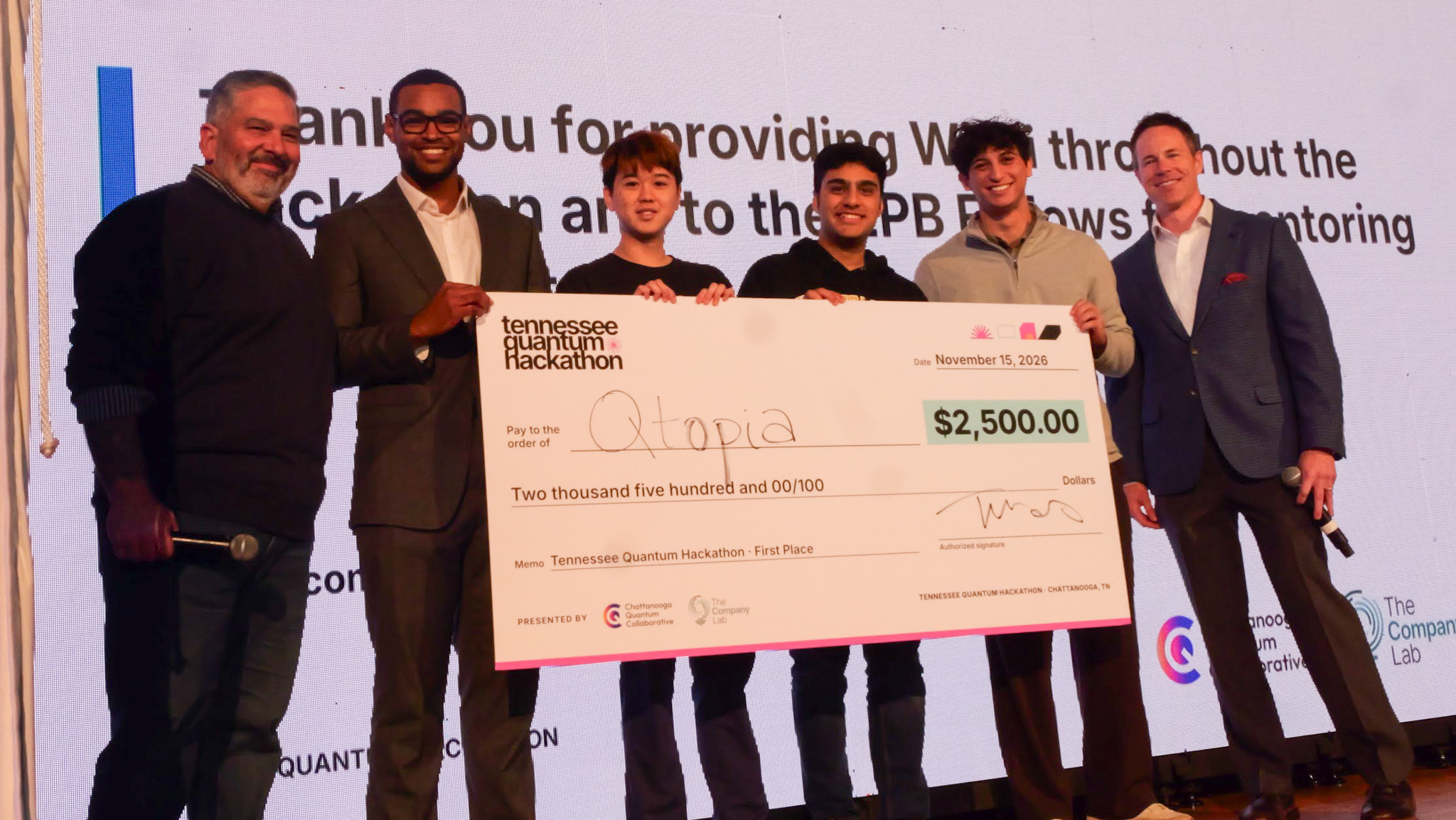
Tennessee State, Vanderbilt team wins inaugural Tennessee Quantum Hackathon
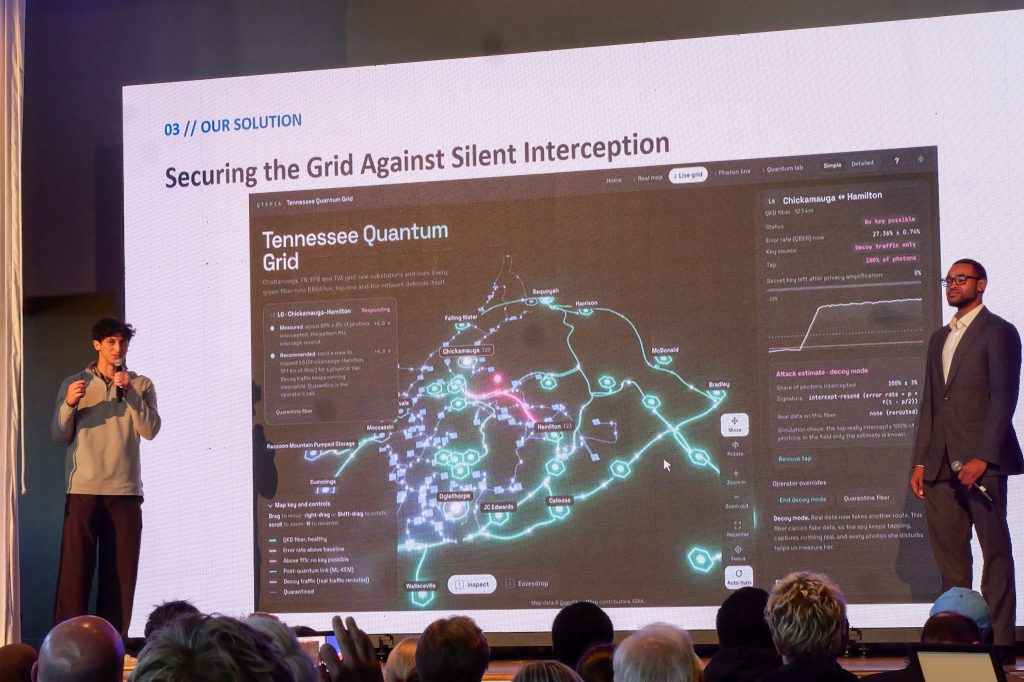
The team built an early-warning system that detects eavesdroppers on utility fiber networks.
A team of students from Tennessee State University and Vanderbilt University took home first place and $2,500 at the first Tennessee Quantum Hackathon, held last weekend at the University of Tennessee at Chattanooga.
The Chattanooga Quantum Collaborative (CQC) and The Company Lab (CO.LAB) presented the 36-hour event. Nearly 60 undergraduates from 13 colleges and universities across the Southeast competed on 12 teams.
Each team chose one of three tracks built around challenges facing the electric grid:
- Secure the Grid asked how quantum technology can protect utility communications before future quantum computers break today’s encryption.
- Plan the Power focused on finding the lowest-cost schedule for which power plants to run each hour.
- Place Sensors on the Grid challenged teams to cover an entire system with the fewest real-time monitoring sensors. Each sensor can cost $40,000 to $180,000 to install.
What’s really interesting though, is that most of the competitors arrived with little or no quantum background. In fact, 87% described themselves as beginners or brand new to quantum.
“You don’t have to be a physicist to have a role in quantum, and this weekend proved it,” said Charlie Brock, CEO of CQC. “Computer science, engineering and cybersecurity students who were new to quantum put real quantum computers to work on real grid problems.”
Throughout the weekend, judges named six finalists who got to pitch. The audience then voted on the winners.
First place ($2,500): Qtopia
Tyler Sanders of Tennessee State and Ethan Kur, Ethan Chen and Asheb Ikram of Vanderbilt designed a system that uses quantum key distribution to detect eavesdroppers on utility fiber networks.
“Spending 36 hours applying quantum technology to protect the power grid, alongside teammates from another university, showed me what this technology can really do and where I can fit in,” said Sanders, a senior mechanical engineering and business student at Tennessee State.
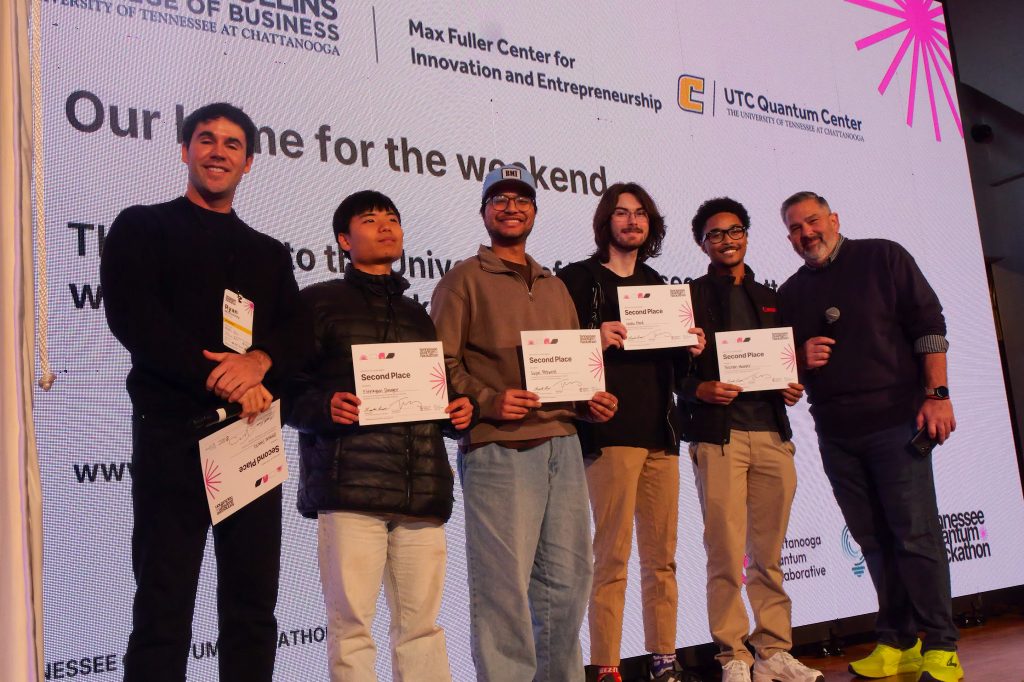
Second place ($1,500): Quintessential Quantum Qubits
Triston Hauser from Austin Peay State University, Noah Ford and Finnegan Danger of East Tennessee State University, Gracie Crooks of UTC and Sujal Pokhrel of Vanderbilt built a hybrid quantum-classical method for scheduling power plants. When tested against TVA’s actual hourly demand, it came within 0.4% of the best possible plan.
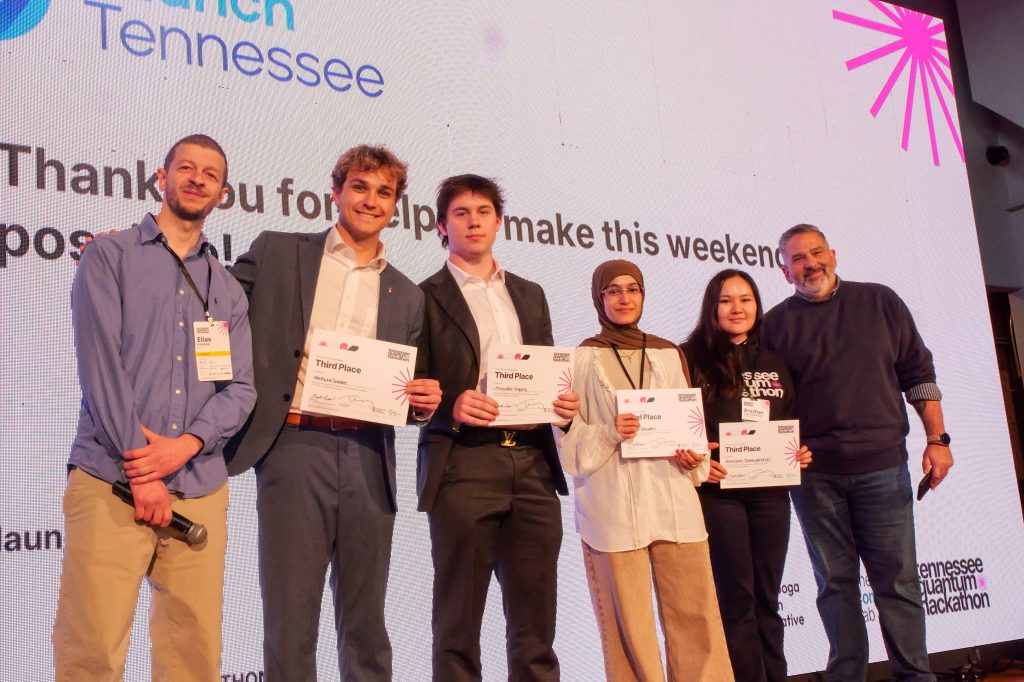
Third place ($500): Pyrrhic
Raman Berwary from Middle Tennessee State University, Alexander Fogarty, Nicholas Harris and Matthew Crabbe of UTC and Aruzhan Zhanybekkyzy of Vanderbilt built a planning tool to help utilities decide which fiber links to protect with quantum encryption when the budget can’t cover them all.
The hope is that these students got a taste for Tennessee’s innovation and entrepreneurial ecosystem, and will want to continue to explore it.
“That is exactly the kind of entrepreneurial energy we want to keep in Tennessee,” said CO.LAB’s Bryan Barringer.
Like what you've read?
Forward to a friend!